









Original Weirs Beach Train Station (1859-1879)
When this webpage describes the “Original” Weirs Beach train station, we are referring to the original train station in its current location. The first train station in Weirs Beach was located just south of the railroad bridge that carries US Route 3 over the railroad tracks. According to Edgar H. Wilcomb in his 1923 booklet “Rambles About the Weirs”, “it was necessary to flag the few passing trains in order to be taken aboard, and passage money had to be paid to the conductor after being taken aboard, for there was no ticket office and no telegraph facilities connected with the first station. Likewise there was no freight station or express office…”. This first station was in existence for less than 10 years. By 1859, the “Original” station had been built at the location where the station still is today.
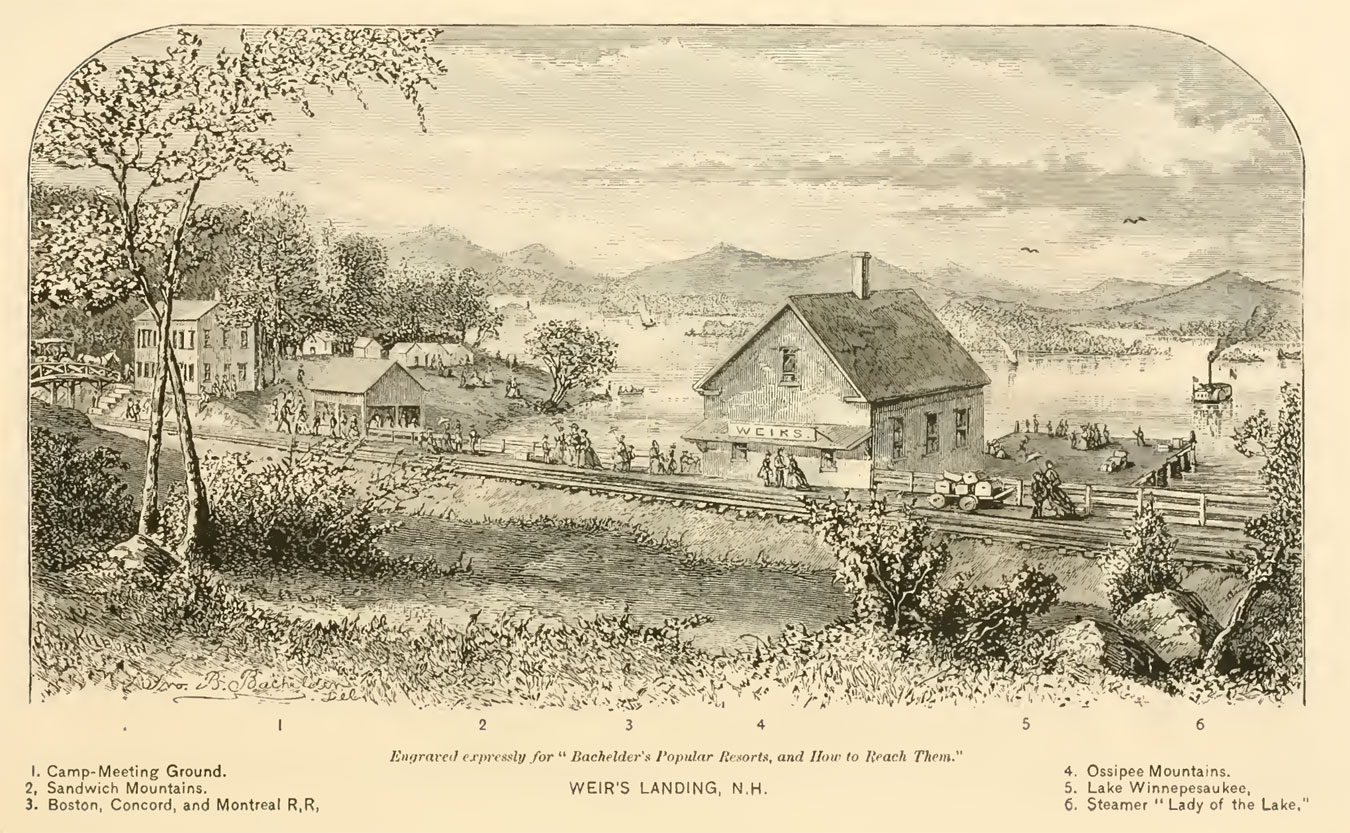
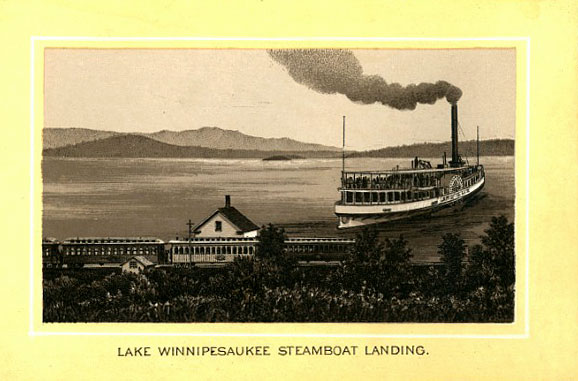
The following engraving, drawn by artist, historian and travel writer John Badger Bachelder, was first printed in the 1874, second edition of “Bachelder’s Illustrated Tourist’s Guide of The United States – Popular Resorts and How to Reach Them”. Bachelder’s color sketch of the scene is available on the New Hampshire Historical Society website here.
Bachelder’s guidebook was first published in Boston in 1873. The first edition was really two books in one, as it had extensive coverage of Gettysburg (“What to See, and How to See It”) for its first 150 pages. Only about 75 pages of the first edition were devoted to the rest of the USA. The first edition did not include an engraving of Weirs Landing. The second edition dropped the coverage of Gettysburg (for which Bachelder became famous) and devoted its nearly 200 pages to travels across the USA (primarily the Northeastern US).
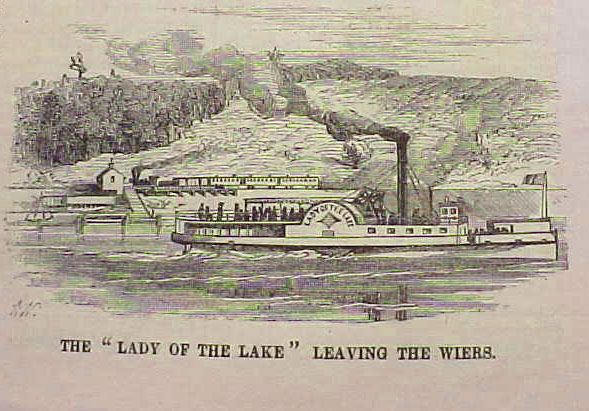
The Weirs engraving and information was repeated in the third edition in 1875, and in a fourth, final edition in 1876.
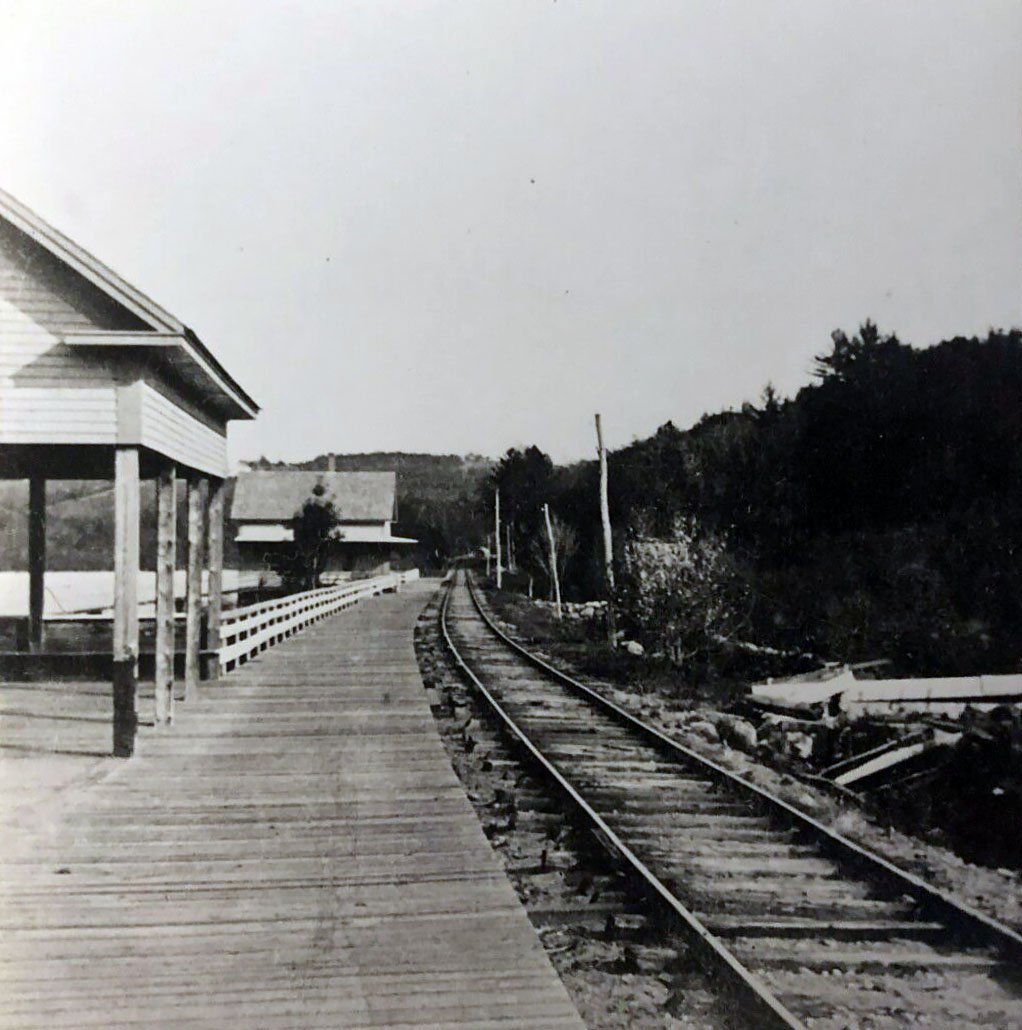
The Weirs Beach boardwalk in the mid-1870s. Looking down the boardwalk from the covered waiting area, the original station is seen. From a stereoview by Tebbetts & Lindsay.
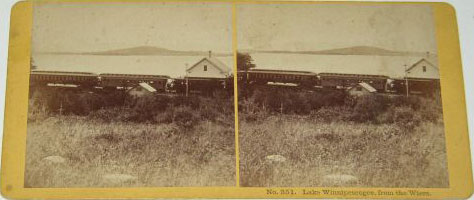
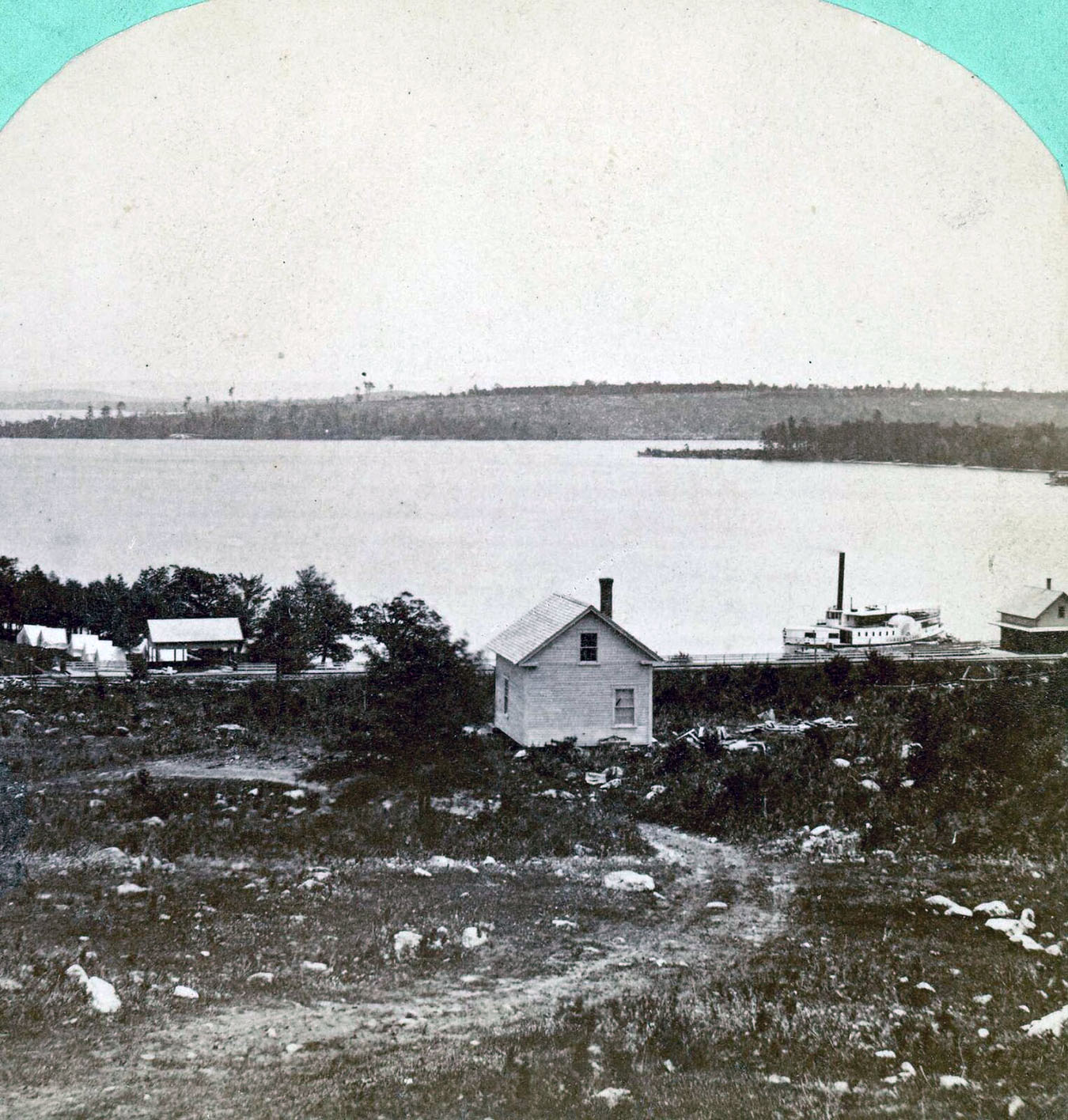
This is a very rare, circa 1870 photograph of the original Weirs Beach train station and an outbuilding sunken several feet below the tracks. It was part of a stereoview (#351) by the Kilburn Brothers. Circa 1870, Lakeside Avenue was a meadow! The street was probably cleared of brush shortly after, circa 1871. On January 5, 1883, the Laconia Democrat newspaper reported, “At the Weirs, the new road from the railroad bridge to Doe’s brickyard is under good headway.” The road was initially called Railroad Avenue, and it was completed by the end of May, 1883. Another decade later, in July, 1894, the Laconia Democrat reported that “….workmen were making a big improvement to Railroad Square”, the block at the center of the Weirs. “A large amount of grade has been hauled in and the roadway is now about level with the railroad tracks, instead of from two to three feet below.” It is probable the street was renamed Lakeside Avenue shortly after the 1894 improvement. A February, 1899 Laconia Democrat article noted that the Laconia Street Railway planned to extend its tracks “… over said Lakeside Avenue to its terminus at a point near the brickyards.”
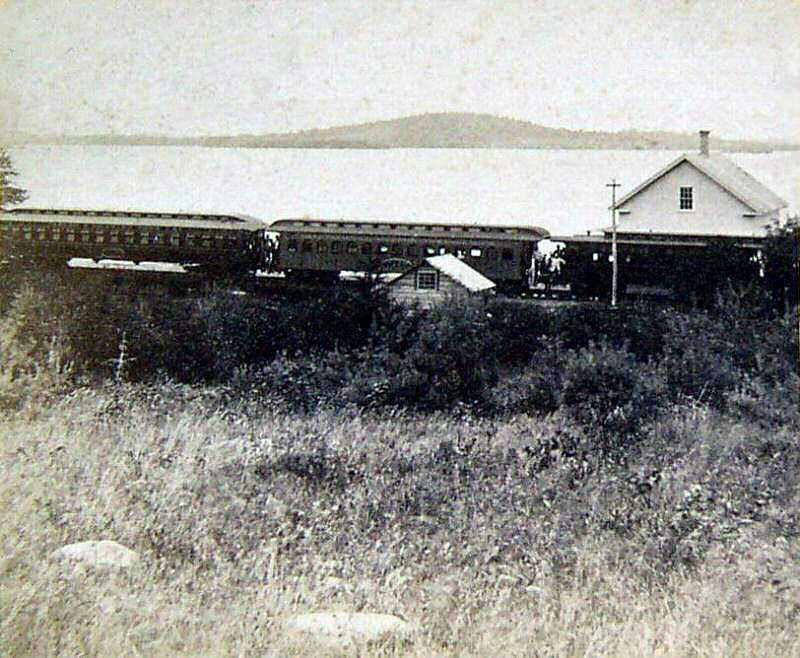
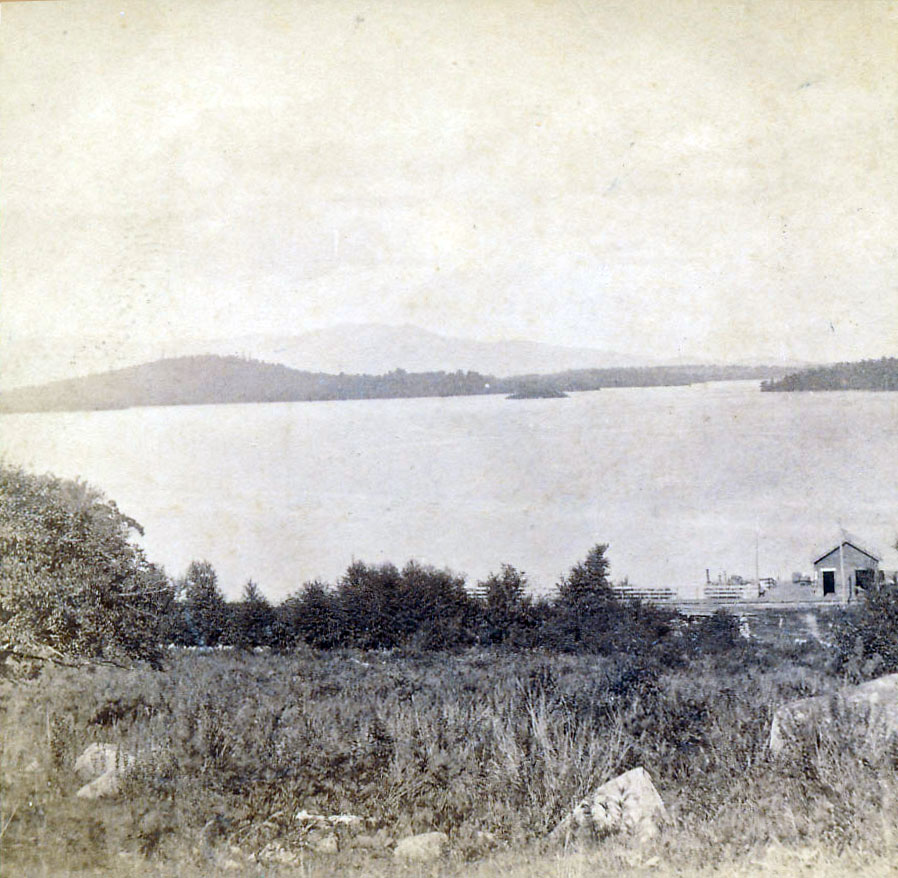
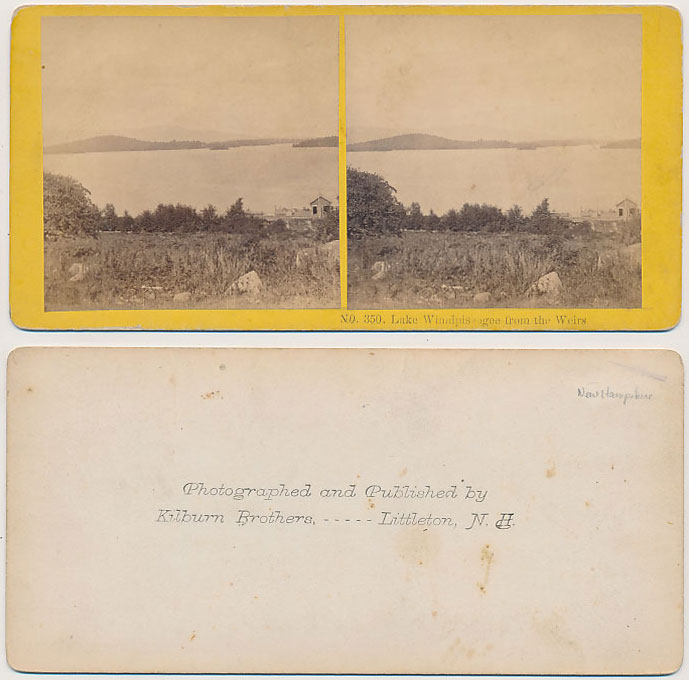
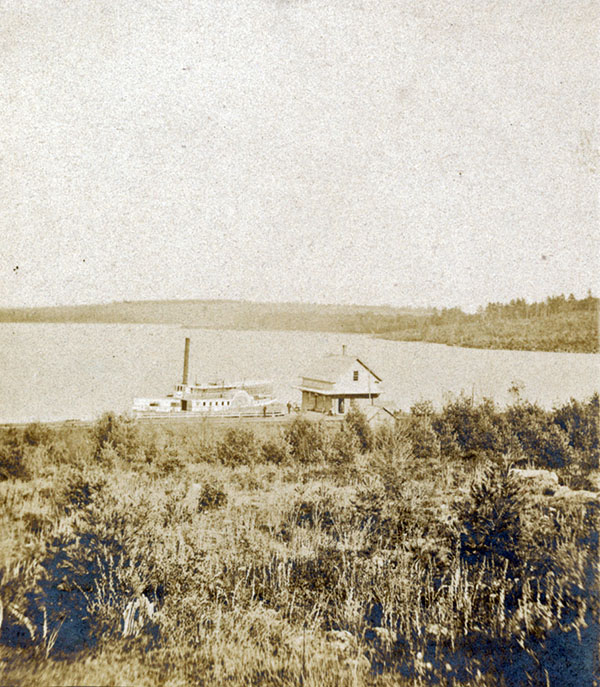
Kilburn stereoview #350 is the oldest photograph of Weirs Beach in existence. Seen is a one-story shack with no chimney, unlike the 1 1/2 – story station house with a single attic window and a chimney seen in Kilburn #351 and all the other photos and engravings on this page, including the 1859 Ballou Pictorial engraving.
A historical account by Theo S. Jewett states that the Weirs station and the attached wharf burned on March 11, 1871. If the account is accurate, the shack may have been a temporary replacement for the station, which was then rebuilt exactly as it was before, until a much grander replacement occurred in 1880, when the Second Weirs Beach Train Station was built.

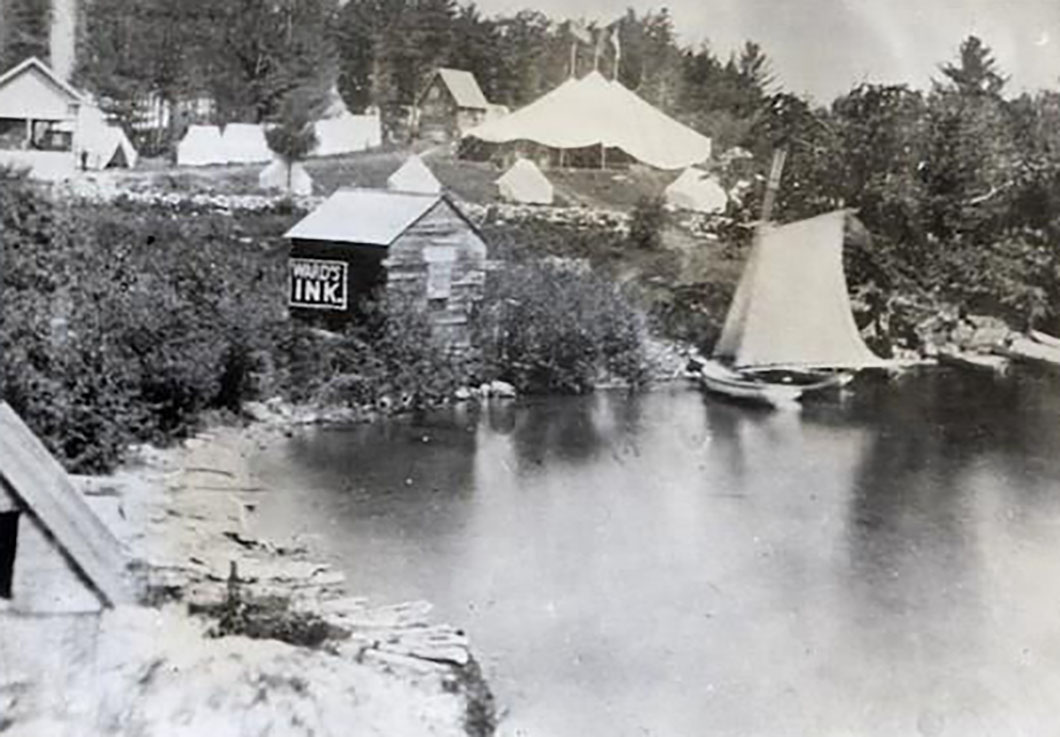
Another early view of the Methodist Campground tents, as seen from the waterfront.
Second Weirs Beach Train Station
Third Weirs Beach Train Station
Fourth Weirs Beach Train Station